

Travelling with breast milk is easier when you plan three things before leaving: how you will carry it, where you will store it and how you will prepare feeds. Think about the whole journey, including airport queues, road-trip stops and the wait before checking into your accommodation.
You can take chilled or frozen milk with suitable cooling, or arrange to have your own milk professionally freeze-dried before your trip. This guide covers both options, plus pumping away from home and what to check before flying.
How to plan travel with breast milk
Start with your usual feeding routine. Will you breastfeed during the journey, bring bottles, express while away or use a combination? Count the feeds you expect to need and allow for delays. A weekend with relatives and access to their fridge will need a different plan from a trip with several hotel changes.
Ask your accommodation specific questions: is there a refrigerator in the room, is frozen storage available, and can you access it before check-in? Also consider where you will wash equipment and prepare bottles. Confirm these details before deciding how much milk to take.
How to store breast milk in a cooler bag with ice packs
For cold transport, WA Health recommends an insulated container with a freezer brick. A cooler bag needs a suitable cold source to keep it cool; insulation alone does not refrigerate its contents.
- Pack milk in clean, securely closed containers labelled with the expression date.
- Use purpose-made milk storage bags or suitable food-safe bottles, rather than ordinary plastic bags as the primary milk packaging.
- Pack frozen ice packs around the milk and minimise how often you open the bag.
- Keep the cooler away from direct sun and plan immediate access to cold storage on arrival.
Do not assume every cooler will maintain the same temperature for the same number of hours. Its performance depends on the insulation, cooling material, weather and journey. If keeping milk frozen is essential, plan for the longest likely door-to-door travel time.
How to thaw frozen breast milk at your destination
Milk that arrives completely frozen can go into suitable frozen storage. If it has started thawing during transport, WA Health advises refrigerating it and using it within four hours; do not refreeze it.
For planned feeds, you can defrost milk slowly in the refrigerator. Milk thawed this way should be used within 24 hours and kept refrigerated. This does not give milk that has warmed during a journey a fresh 24-hour storage period.
To warm a feed, place the closed bottle in warm water. Never use a microwave to heat or thaw milk because heating can be uneven and cause burns. The Sydney Children's Hospitals Network handling guide explains the different limits for milk thawed inside and outside the fridge. These instructions concern expressed milk, not rehydrated powder.
Taking a breast pump: expressing and storing breast milk away from home
If you normally pump, include expressing breaks in your itinerary. Pack the pump, its charger or required power accessories, clean collection equipment and spare parts you routinely use. A manual pump may be a useful backup if that suits your routine. Check your airline's battery rules for any powered equipment.
Wash your hands before expressing and follow the manufacturer's cleaning instructions. Plan how to store expressed milk after each session, with labels to distinguish newly collected milk from the stash you brought along. Keep clean and used equipment separate.
Expressing while separated from your baby can help maintain your milk supply. For individual advice about changing your routine, speak with a lactation consultant or the Australian Breastfeeding Association. If your infant is premature or unwell, follow their healthcare team's handling instructions.
Flying with breast milk in Australia
What you are allowed to bring depends on your departure terminal, route and whether your baby is with you. Check both airport screening requirements and your airline's baggage rules.
Domestic flights
Australia's international liquid restrictions do not apply to most domestic flights. However, a domestic service departing from an international terminal can be subject to those restrictions. Check your terminal as well as the destination printed on your ticket.
International flights with your baby
Qantas's family travel guidance allows reasonable quantities of liquid, aerosol and gel products for an accompanying infant or toddler for the journey and possible delays. Confirm the arrangements for milk, baby food and cooling packs with your own airline and departure airport. Pack feeding supplies where you can present them for screening.
Travelling without your baby
Do not assume the same baby-product allowance applies when travelling without your child. The Australian Breastfeeding Association's air-travel guidance says breastmilk in carry-on luggage is treated like other liquids on international flights when your baby is not with you. Confirm your specific arrangements before packing a large stash.
For all overseas trips, check destination and transit-country requirements separately. Airport security clearance does not establish permission to import a milk product.
Travelling with freeze-dried breast milk
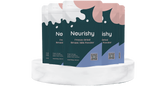
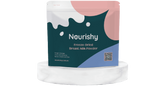
Nourishy turns the frozen breast milk you send us into powder, returned in labelled pouches. Sealed pouches stored according to their instructions do not need refrigeration, which can simplify the cooling arrangements for a trip. You still need suitable water and clean equipment when preparing a bottle.
Protect pouches from punctures, heat and moisture. Keep them in their original packaging, and move them into a cool, dry indoor location at your destination. Do not leave them stored in a vehicle.
The Australian Government's powder guidance distinguishes organic food powders, including powdered baby formula, from restricted inorganic powders. Organic powders are not subject to the same quantity limit, although screening still applies. Check how your pouches will be handled on your route; this is not a guarantee of approval at every airport.
Frozen or freeze-dried: which suits your trip?
| Planning question | Chilled or frozen milk | Sealed freeze-dried pouches |
|---|---|---|
| What goes in the luggage? | Milk containers and a suitable cooling setup. | Protected pouches, preparation instructions and feeding equipment. |
| What needs checking on arrival? | Access to appropriate cold storage. | A cool, dry place for pouches and suitable bottle-preparation facilities. |
| What preparation is involved? | Thawing if needed and careful handling. | Measuring the water and powder according to your label. |
| What needs arranging before departure? | A cooling plan for the full journey. | Enough time for shipping, freeze-drying and return delivery. |
You do not have to use one approach for the entire holiday. For example, your plan might include cold milk for the journey and sealed pouches for later days. Base the choice on the facilities you will actually have.
Prepare to feed your baby during the journey
Keep the next feed and its equipment accessible in your nappy bag rather than at the bottom of a suitcase. Pack a clean baby bottle and any other items your feeding plan requires.
For Nourishy pouches, follow the personalised water and powder instructions. Do not guess the dilution. Once you open a pouch or rehydrate the powder, follow the handling and use-by directions supplied with your order. The storage conditions for sealed powder no longer apply to a prepared bottle.
Review Nourishy's preparation guide before leaving, and keep your label instructions available when you are offline.
Your travelling-with-breast-milk checklist
- Plan feeds, expressing breaks and a buffer for delays.
- Confirm cold storage or pouch storage at each destination.
- Pack milk, feeding equipment, cleaning supplies and any pump accessories.
- Keep labels and preparation instructions readable and accessible.
- Check airline, airport, transit and destination requirements.
- Allow sufficient processing and delivery time if arranging freeze-drying.
Which Nourishy packaging works best for travel?
Single-Feed keeps each original milk bag separate in its own pouch. Multi-Feed provides a larger pouch for preparing different amounts, following its label directions. Combo offers both formats.
Think about whether you will prepare bottles mainly in one place or pack individual pouches for outings. Compare Nourishy's packaging options, and contact us to confirm processing and return-delivery timing before booking the service around a departure date.